
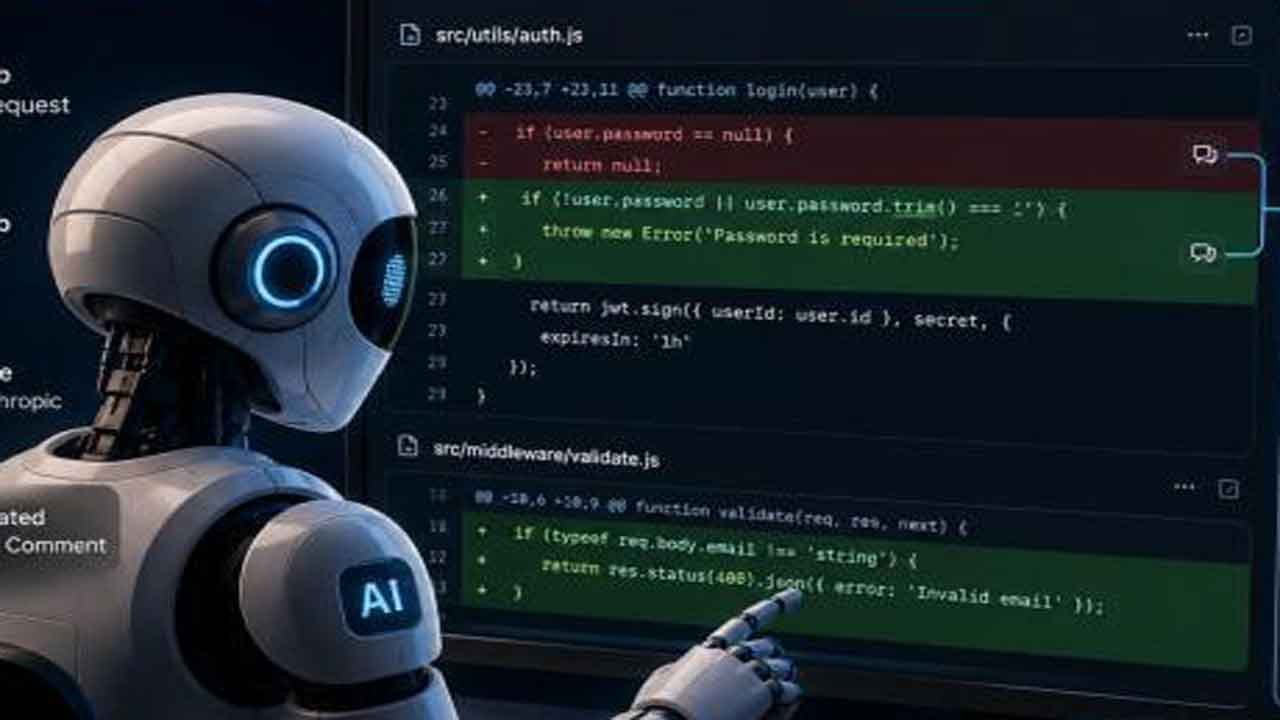
Claude Ship AI: Features, How It Works and What Makes Anthropic’s New Tool Different in 2026
Article last updated: November 24, 2026.
Artificial intelligence is changing the way software developers build applications, websites and digital products. AI coding assistants can already write code, explain programming errors and help developers complete complicated tasks. However, there is another important part of software development that often takes just as much time: reviewing code, fixing problems and getting approval before a project can move forward.
Anthropic is now trying to address this challenge with its latest product, Claude Ship AI.
Introduced on November 23, 2026, Claude Ship is a new AI-powered system designed to help software teams manage the work that happens after code has been written. Instead of simply generating programming code, it can review pull requests, work on reported problems, respond to failed automated checks and handle certain approval decisions based on rules created by a development team.
The launch is particularly interesting for companies and developers who already use AI coding agents to build software. As these tools generate more code, reviewing and approving changes can become a major bottleneck.
Claude Ship aims to make that process faster without removing the development team’s control.
Read Also This: Gemini 4 Argon: Features, How to Use & ChatGPT Comparison
What Is Claude Ship AI?
Claude Ship AI is an automated software development workflow introduced by Anthropic for GitHub-based projects. It brings together three capabilities: Code Review, PR Steward and Claude Approvals.
These components work together to help developers move their code changes through different stages of the development process.
For example, imagine a developer creates a new feature for a website and opens a pull request on GitHub. A pull request, commonly called a PR, is a request to review proposed code changes before they become part of a project’s main codebase.
Traditionally, another developer needs to inspect the changes, identify potential problems, leave feedback and wait for the original developer to make corrections. The process may involve several rounds of reviews and testing.
Claude Ship is designed to automate much of this repetitive work.
Its AI agents can examine the submitted code, identify issues, work on certain fixes and determine whether a change meets the team’s approval requirements.
Importantly, it does not mean that every change can automatically enter a production project. Teams can establish rules that require human approval for sensitive or higher-risk changes.
How Does Claude Ship AI Work?
The system follows a workflow that connects code review, problem-solving and approval decisions.
When a pull request is opened, the relevant Claude Ship capabilities can begin working according to the settings configured for that repository.
The process generally involves three stages:
- Code Review examines the proposed changes and reports potential problems.
- PR Steward works on review feedback, failed checks and merge conflicts.
- Claude Approvals evaluates whether the changes meet the team’s approval policy.
Each component has a different responsibility, which makes the overall system more flexible than a simple AI code reviewer.
1. Code Review: Finding Problems Before They Reach Production
Code Review is one of the central components of Claude Ship. It examines proposed code changes against the wider codebase rather than looking at individual lines without context.
This matters because a small programming change can sometimes create problems elsewhere in an application.
For example, changing a function might affect another feature, break an existing integration or introduce an unexpected error.
Anthropic says its Code Review system uses multiple AI agents to examine changes from different perspectives. It also verifies findings before reporting them, helping developers focus on issues that are more likely to matter.
The system organizes its findings into categories, including:
- Important: Issues that developers should pay attention to.
- Nit: Minor observations or suggestions.
- Pre-existing: Problems that existed before the submitted changes.
Another useful feature is the availability of three review levels.
Quick Review: Designed for faster checks when a developer wants an initial assessment.
Standard Review: Provides a more balanced review for regular development work.
Deep Review: Offers a more thorough examination for changes that may require additional attention.
Teams can select different review levels for individual repositories. They can also use a REVIEW.md file to customize what the system should look for.
2. PR Steward: An AI Agent That Works on Coding Problems
Finding a problem is only the first step. Developers still need to understand the feedback, modify the code and run the necessary tests again.
This is where PR Steward becomes particularly interesting.
PR Steward is a new beta component of Claude Ship that can work on issues raised during code reviews, feedback from human reviewers, failing continuous integration checks and merge conflicts.
Continuous integration, commonly known as CI, refers to automated processes that test code whenever developers submit changes. These checks help teams identify errors before new code is accepted.
When a check fails, developers often have to investigate the problem, update the code and submit another revision.
PR Steward is designed to handle some of this work automatically.
What Can PR Steward Do?
Its main capabilities include:
- Responding to comments from human reviewers.
- Working on findings from Claude Code Review.
- Addressing feedback from other code review tools.
- Investigating and working on failed automated checks.
- Helping resolve merge conflicts.
- Keeping pull requests updated as the main branch changes.
One detail worth highlighting is transparency.
After making changes, PR Steward comments on the pull request to explain what it modified and how developers can undo those changes.
Developers can also guide its work through GitHub comments. They can use @claude to provide additional instructions or @claude stop to tell the agent to stop working.
However, PR Steward is designed not to approve or merge pull requests itself. Its responsibility is to help resolve development problems, not independently authorize the final change.
3. Claude Approvals: AI-Powered Pull Request Approval
Perhaps the most interesting part of Claude Ship is Claude Approvals.
In many development teams, getting approval can take considerable time, particularly when senior developers must review several routine changes alongside more complicated programming work.
Claude Approvals introduces a policy-based approach to this process.
Teams can create an approval policy as a file inside their GitHub repository. This file describes the conditions under which Claude can approve a change and when a human reviewer must be involved.
For example, a company might allow routine documentation updates to receive automated approval while requiring a senior developer to review changes involving authentication, payment systems or other sensitive areas.
Claude Approvals can consider different signals when making its decision, including Code Review findings and custom classifiers defined by the team using natural language.
This gives organizations more flexibility than relying only on basic file-path rules.
Does Claude Approve Every Pull Request Automatically?
No. This is an important distinction.
Claude Approvals follows the organization’s configured policy. It can approve eligible routine changes when the rules allow it, but changes that require human attention can be sent to the appropriate reviewers.
Anthropic recommends that most customers initially use an observe-only mode. In this mode, teams can see how Claude evaluates approval requests without allowing it to approve changes.
Once the organization is comfortable with its decisions, administrators can configure branch protection and required checks to enforce the approval process.
Claude Ship AI vs Claude Code: What Is the Difference?
Although both products come from Anthropic, they have different responsibilities.
Claude Code is an AI coding assistant that helps developers write, understand, modify and work with software projects.
Claude Ship focuses on what happens after a developer has prepared a code change and opened a pull request.
Here is a simple comparison:
| Feature | Claude Code | Claude Ship |
|---|---|---|
| Main purpose | Writing and working with code | Managing the PR workflow |
| Code generation | Yes | Not its main purpose |
| Code review | Available through its tools | Core capability |
| Fixing review feedback | Can help | PR Steward automates this work |
| Failed CI checks | Can help investigate | PR Steward works on them |
| Approval policies | Not its main focus | Claude Approvals |
| GitHub workflow | Supports development workflows | Focuses on pull requests |
The two products can complement each other. A developer can use Claude Code to build a feature and Claude Ship to help review and prepare the resulting changes.
However, using Claude Ship does not require a developer to use Claude Code.
New /ship Command in Claude Code
Anthropic has also introduced a convenient way for individual developers to use Claude Ship through Claude Code.
Developers can run the new /ship command when their changes are ready.
The command helps push the changes, open a pull request, review the submitted work and address feedback or failing checks.
This creates a more connected experience for developers who want to move from writing code to preparing it for review without manually managing every step.
The final outcome still depends on the developer’s permissions and the repository’s branch protection rules.
The /ship command is rolling out in Claude Code and the desktop app.
Claude Ship AI Availability: Who Can Use It?
Claude Ship was introduced on November 23, 2026, and is available in beta for eligible Claude Team and Claude Enterprise customers using GitHub repositories.
However, not every component has the same availability status.
- Code Review: Generally available.
- PR Steward: Beta.
- Claude Approvals: Beta.
Organizations can enable the components separately for individual repositories rather than adopting the entire system at once.
Administrators can also choose review levels, decide when reviews should run and configure spending limits.
There are some important restrictions. Claude Ship is not available to organizations using Zero Data Retention, Anthropic’s HIPAA configuration or customer-managed encryption keys.
Developers should check their organization’s eligibility before planning to use the service.
Claude Ship AI Pricing: Is It Free?
Claude Ship does not have a simple universal free price.
Anthropic uses token-based billing for its usage, meaning the final cost can depend on how much work the system performs.
Several factors can affect the overall expense:
- Number of pull requests processed.
- Size and complexity of submitted changes.
- Selected review level.
- Frequency of automated reviews.
- Amount of work performed by PR Steward.
- Token usage by custom classifiers.
Claude Approvals has no base charge, but classifiers used in approval policies are billed according to their token usage. If an approval policy uses Claude’s review, it also triggers a billed Code Review, including when operating in observe-only mode.
Running /ship counts as regular Claude Code usage.
Administrators can set spending limits for Code Review and PR Steward, which helps organizations manage costs during testing and wider deployment.
Anthropic has also announced that eligible Claude Enterprise organizations can claim at least $10,000 in Claude Ship credits, subject to the offer’s terms. The credits must be claimed by January 15, 2027, and used within 30 days of claiming.
Therefore, companies should check the official pricing and eligibility details before enabling the service across multiple repositories.
Main Benefits of Claude Ship AI
Claude Ship could be useful for software teams that regularly manage large numbers of pull requests.
Here are some of its biggest potential advantages.
1. Faster Code Reviews
Developers do not always need to wait for another team member to begin the initial review. Claude can examine submitted changes and report potential issues.
2. Less Repetitive Development Work
PR Steward can work on certain review comments, failed checks and merge conflicts. This can reduce the amount of repetitive troubleshooting developers need to handle manually.
3. More Consistent Approval Rules
Organizations can define approval requirements and apply them across their repositories. This makes it easier to distinguish routine changes from those that need additional attention.
4. Better Development Workflow
Instead of switching repeatedly between writing code, checking feedback and fixing errors, developers can delegate some of these tasks to AI agents.
5. Human Control Remains Important
Teams can decide which repositories use the system, how deeply code should be reviewed and which changes require human approval.
Limitations and Things Developers Should Know
Despite its capabilities, Claude Ship should not be treated as a replacement for experienced software engineers.
Anthropic itself warns that the system may miss bugs, security vulnerabilities and other problems.
AI-generated reviews can sometimes overlook complicated issues, misunderstand project requirements or suggest fixes that need further testing.
There are also practical considerations:
- PR Steward and Claude Approvals are still in beta.
- Token-based usage can increase development costs.
- Organizations need suitable GitHub access and configuration.
- Sensitive code changes may still require experienced human reviewers.
- Automated approval policies need careful testing before enforcement.
A sensible approach is to start with one repository, use conservative settings and review the system’s decisions before expanding its responsibilities.
Is Claude Ship AI Worth Trying in 2026?
For development teams that already rely on AI coding assistants, Claude Ship is an interesting development.
Its biggest strength is that it focuses on a part of software development that is often overlooked: everything that happens after code has been written.
Code generation can help developers work faster, but that speed is less useful if every new change creates a backlog of reviews, corrections and approval requests.
By combining code review, automated fixes and policy-based approvals, Anthropic is attempting to address this problem as one connected workflow.
It may be particularly valuable for engineering teams handling many pull requests, companies building software with AI agents and organizations looking to reduce repetitive review work.
Smaller teams may also find the /ship command useful, although the token-based pricing and beta status are worth considering.
Ultimately, the real value of Claude Ship will depend on how accurately it handles different codebases and how confidently teams can use its automated decisions.
Final Thoughts
Claude Ship represents an important step in Anthropic’s approach to AI-assisted software development.
Rather than focusing only on helping developers write more code, the company is working toward automating the review, correction and approval processes that follow.
Its three main components, Code Review, PR Steward and Claude Approvals, give development teams different ways to delegate repetitive work while maintaining control over important decisions.
It is still early to judge its long-term impact, particularly because two of its major components are in beta. Nevertheless, Claude Ship is a development worth watching as AI coding tools become a bigger part of professional software engineering.
For developers and technology companies, the key question is no longer just how quickly AI can write code, but how safely and efficiently that code can move from a pull request to a finished product.
Frequently Asked Questions (FAQs)
1. What is Claude Ship AI?
Claude Ship is an AI-powered development workflow from Anthropic that helps review GitHub pull requests, work on coding issues and approve routine changes according to team-defined policies.
2. When was Claude Ship launched?
Anthropic introduced Claude Ship on November 23, 2026. It is available in beta for eligible Claude Team and Enterprise customers using GitHub repositories.
3. What are the three main features of Claude Ship?
Its three main components are Code Review, PR Steward and Claude Approvals. They handle code inspection, fixing development issues and policy-based approval decisions.
4. Can Claude Ship fix coding errors automatically?
PR Steward can work on review feedback, failing CI checks and merge conflicts. Developers can also guide its work through GitHub comments.
5. Can Claude Ship approve and merge code without a human?
Claude Approvals can approve routine changes when the team’s policy permits it. Riskier changes can require human approval. PR Steward itself is designed not to approve or merge pull requests.
6. Is Claude Ship free to use?
Claude Ship uses token-based billing. Its total cost depends on usage, review levels, pull request activity and the work performed by its agents.
7. Does Claude Ship work with GitHub?
Yes. Claude Ship is designed for repositories hosted on GitHub and is available to eligible Claude Team and Enterprise customers.
8. What is the difference between Claude Code and Claude Ship?
Claude Code helps developers create and modify software. Claude Ship focuses on reviewing pull requests, addressing feedback and handling approval workflows after code changes are submitted.
9. Is Claude Ship available for individual users?
Individual developers can use the /ship command through Claude Code as it rolls out, subject to their access, permissions and repository rules. The full organizational Claude Ship offering is available to eligible Team and Enterprise customers.
10. Is Claude Ship safe for production projects?
It can assist with production workflows, but it is not a guarantee of bug-free or secure code. Teams should test its decisions, maintain appropriate branch protection and require human review for sensitive changes.